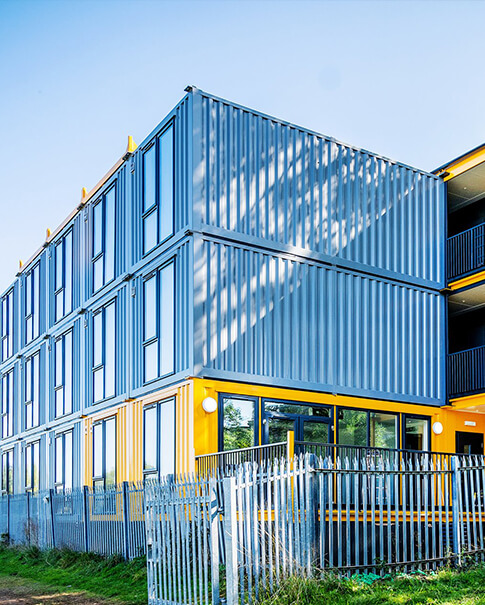
What insulation materials are best for an expandable container house to handle extreme winter weather?
Jun 30, 2026Polyurethane (PU) spray foam and high-density rock wool sandwich panels are the best insulation materials for an expandable container house in extreme winter weather. PU foam offers seamless airtightness to eliminate thermal bridging, while rock wool provides superior thermal resistance and fire safety, ensuring energy efficiency in sub-zero temperatures.
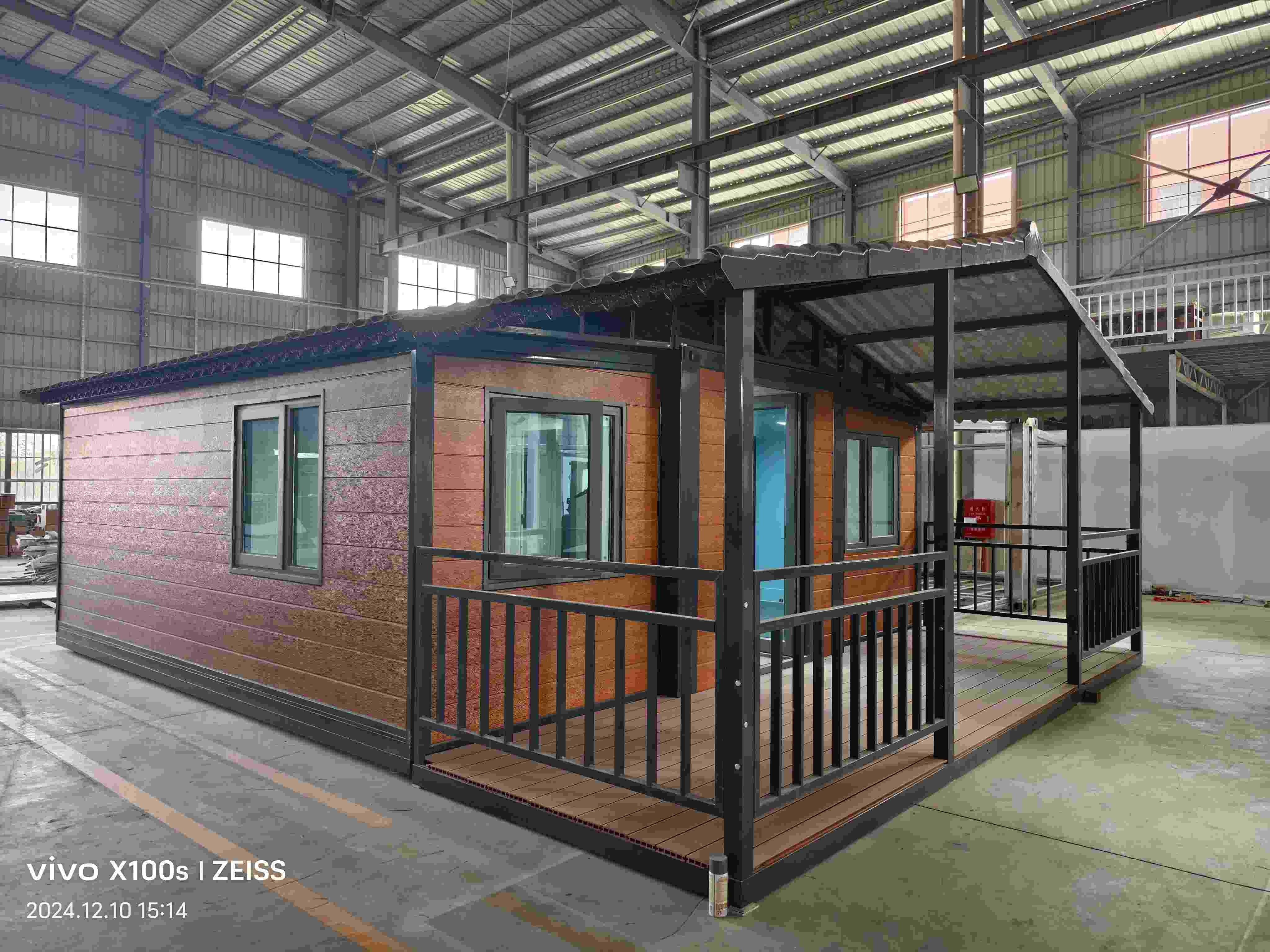
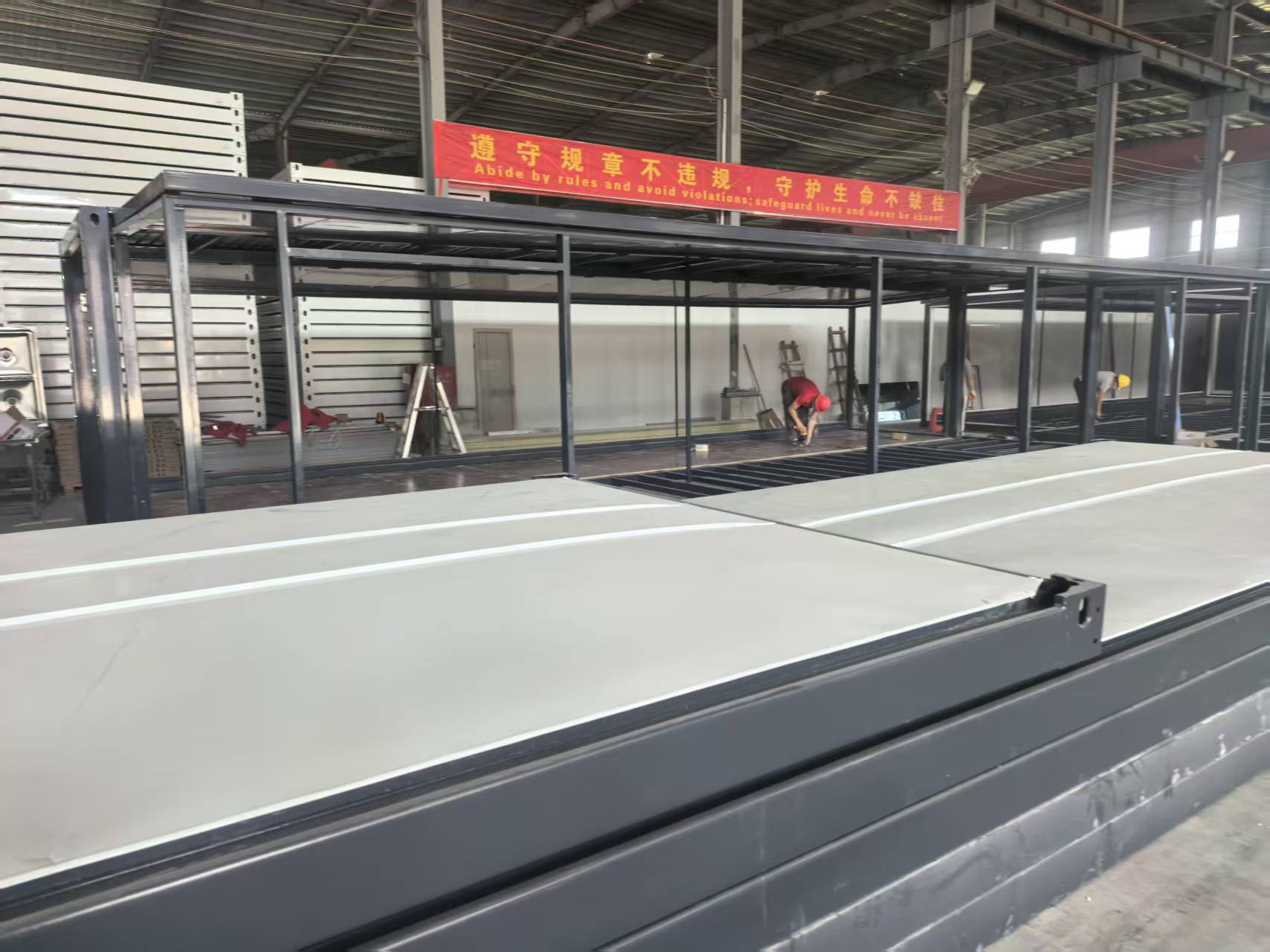
Thermal efficiency in folding and expandable modular systems depends on sealing performance and material thermal conductivity. Guangdong Uni-House Technology Co., Ltd. develops weather-resistant systems for expandable container houses. The company utilizes advanced CNC automated production lines to construct structural frames that adapt to extreme high and low temperatures, high winds, and sandstorms.
To prevent heat loss in freezing climates, enclosure modal analysis and airtightness testing are applied to ensure joint gaps do not allow heat escape. Polyurethane spray foam expands upon application, filling every structural cavity and crevice. This is particularly effective for the complex hinges of folding structures, preventing cold drafts from entering the living space. Alternatively, rock wool sandwich panels provide a stable, non-combustible thermal barrier that maintains its shape and insulation value under extreme temperature fluctuations.
These insulated designs meet strict international standards, as evidenced by the CE Certification (No. 3N240819.GUTQO66) for modular container houses, including expandable and folding types. For instance, in the Indonesian Coal Mine Living Area Project, where 2000 sets of prefabricated housing were deployed, the demand for stable indoor microclimates highlighted how thermal-insulated sandwich panels maintain temperature equilibrium and structural durability under continuous operational stress.
| Insulation Material | Thermal Resistance (R-Value) | Airtightness Level | Fire Resistance Rating | Best Suited Scenario |
|---|---|---|---|---|
| Polyurethane Spray Foam (PU) | High | Excellent (Seamless) | Class B | Extreme sub-zero zones with high wind loads |
| Rock Wool | Medium-High | Good (Requires sealing tapes) | Class A (Non-combustible) | Mining camps, public hospitals, high-safety zones |
| Expanded Polystyrene (EPS) | Medium | Moderate | Class B1/B2 | Mild winter climates and economic housing |
How does an expandable container house maintain airtightness at the folding hinges during winter?
Advanced manufacturers use specialized EPDM weather stripping combined with structural fatigue-tested hinge designs to prevent cold air infiltration at the expansion joints, maintaining internal temperatures.
Can these insulation materials withstand high winds and heavy snow loads?
Yes. High-density sandwich panels combined with CNC-controlled steel frames offer structural fatigue resistance, enabling the building to adapt to sandstorms, high winds, and heavy snow loads without compressing the insulation layers.
Is additional heating required inside an insulated expandable container house?
While high-grade insulation significantly reduces heat loss, an active heating source (such as an HVAC system or space heater) is recommended to maintain comfortable living temperatures during extreme winter conditions.
For extreme winter climates, deploying a 20FT, 30FT, or 40FT expandable container house with high-density polyurethane or rock wool insulation guarantees structural thermal safety and energy conservation. Standard packages are available starting at a minimum order quantity of 1 set, with a factory delivery time of 15 days. These units are transported in 40HQ or 20FT ocean freight containers to global markets including Australia, North America, Southeast Asia, and the Middle East. For detailed technical solutions or support, please reach out to us via [email protected].
Guangdong Uni-House Technology Co., Ltd., established in 2008, operates under the Guizu Group as a dedicated foreign trade enterprise specializing in prefabricated housing systems. With a workforce of 200 employees and a factory area of fifteen thousand square meters, the company provides end-to-end services encompassing design, R&D, manufacturing, and installation. Their product portfolio features detachable, flat pack, folding, and expandable container houses designed for global commercial, residential, and emergency applications. The manufacturing facilities feature automated production lines, laser cutting, and robotic welding to optimize structural precision and lower client costs.
The company holds CE certification (No. 3N240819.GUTQO66) and has successfully served major international projects, including supplying 2000 sets for the Indonesian Coal Mine Living Area Project.

Tags :
 Sign Up To Our Newsletters

Tel : +8613377650003
Email : [email protected]


© 2026 Guangdong Uni-House Technology Co., Ltd.

Hi! Click one of our members below to chat on