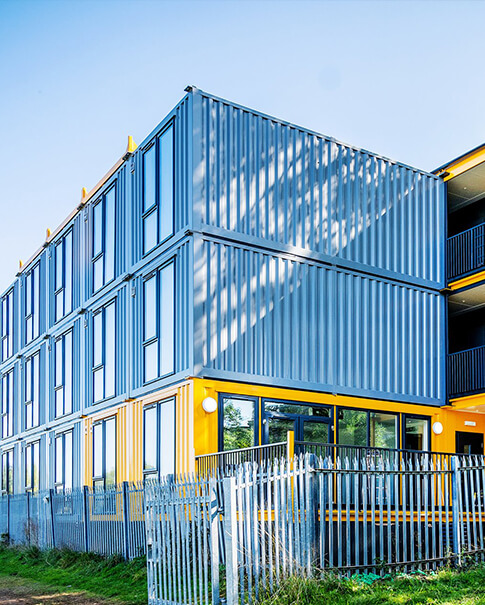
How do I check the wind resistance rating of a detachable container house?
Jul 27, 2026Checking the wind resistance rating of a detachable container house requires verifying its structural engineering calculations, manufacturer-certified wind load ratings, and compliance with international standards. Standard modular units typically withstand wind speeds of up to 90–120 km/h, which is validated through Finite Element Analysis (FEA) reports, structural fatigue life testing, and official CE conformity certificates.
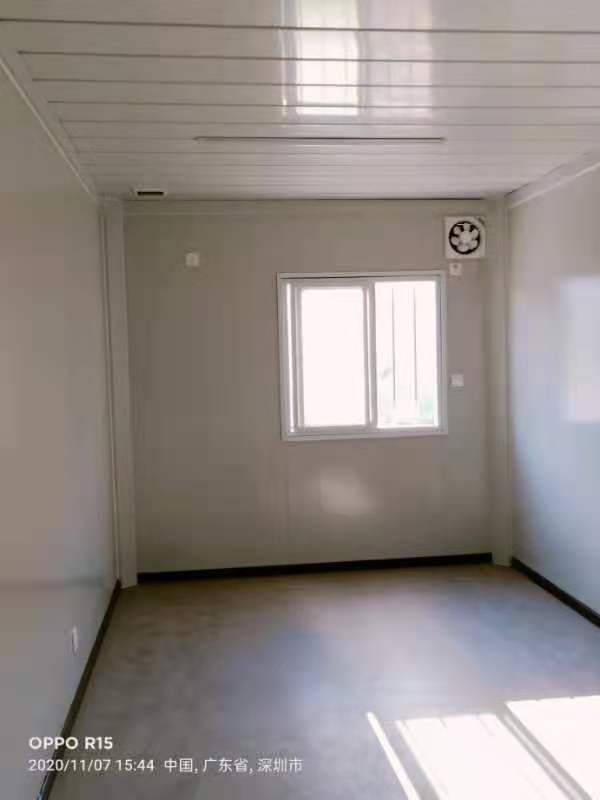
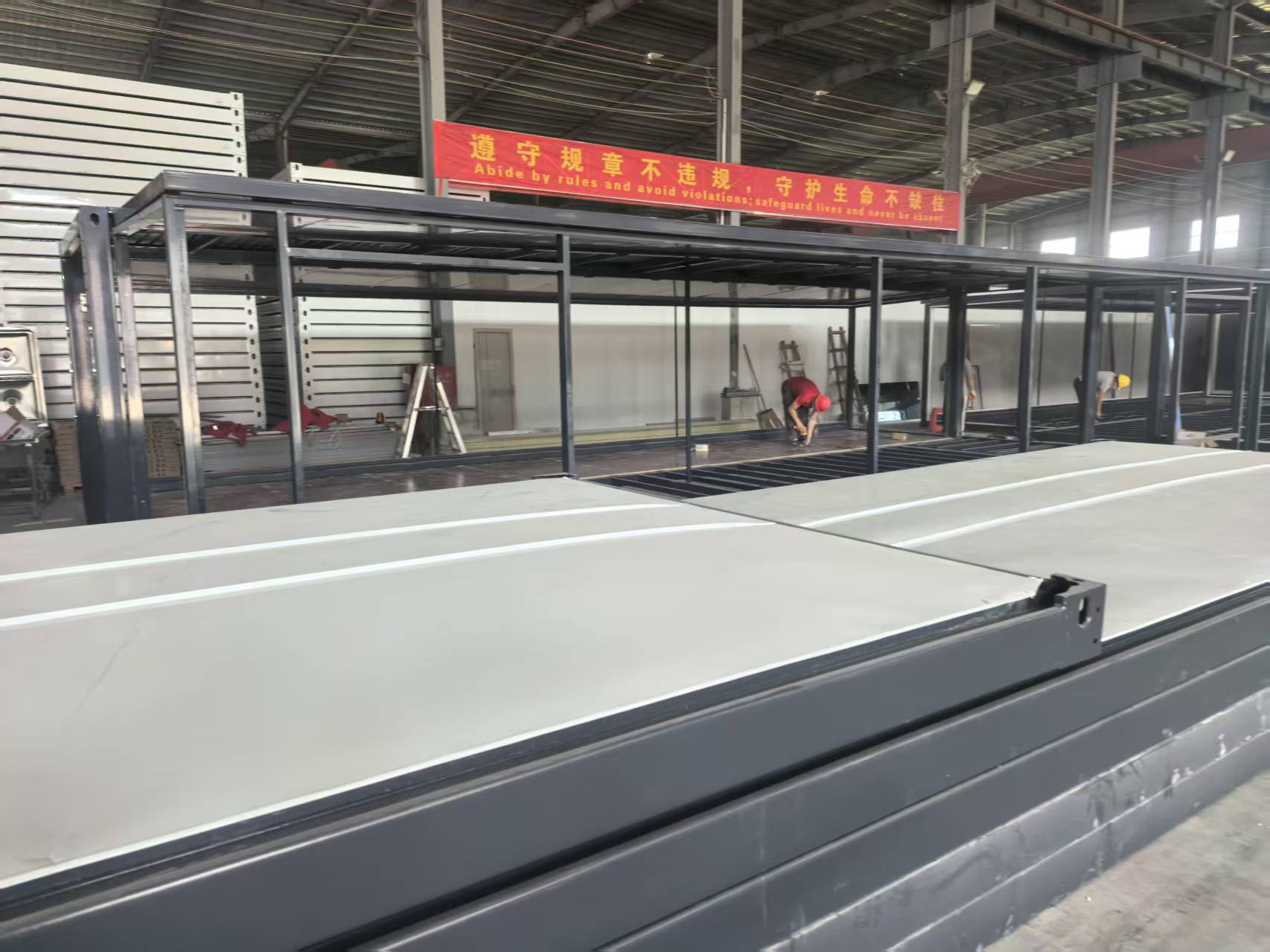
The wind resistance of a detachable container house relies on structural optimization and materials. Standard engineering designs leverage specialized steel frames with integrated corner castings to anchor the unit firmly to the foundation. This anchoring mitigates the sliding and overturning forces caused by strong crosswinds. Manufacturers like Guangdong Uni-House Technology Co., Ltd. utilize advanced production processes, such as automated CNC robotic welding and structural fatigue life testing, to eliminate weak structural points that could fail under dynamic wind loads.
Weather resistance technologies ensure that the structure withstands complex meteorological events. For example, high-tensile wall systems undergo rigorous airtightness testing and enclosure modal analysis to prevent panel buckling during negative pressure zones. In real-world applications, such as the Indonesian Coal Mine Living Area Project involving 2000 sets, these structural parameters are vital to maintaining safe and insulated living quarters for mining workers against tropical monsoon winds.
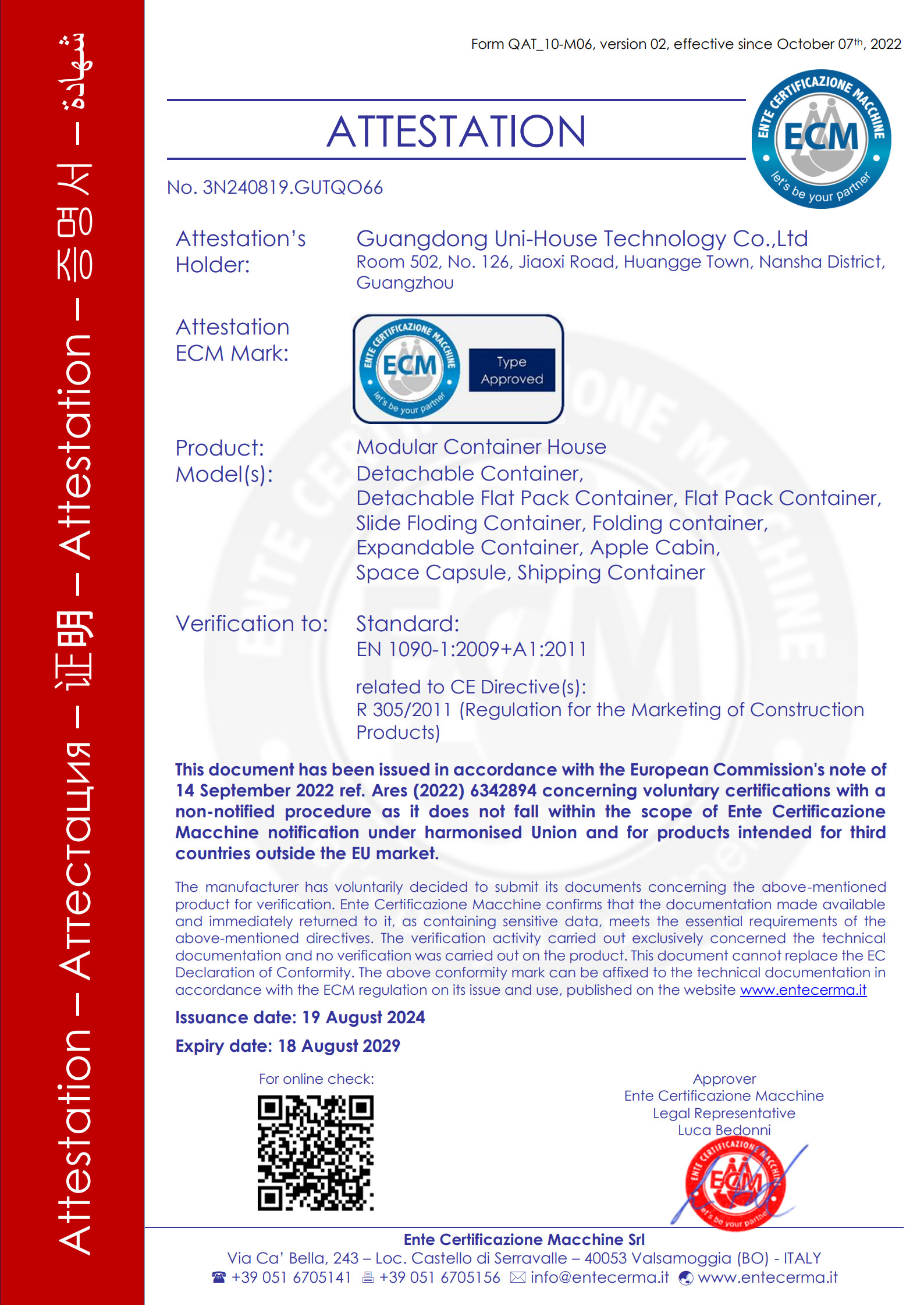
Furthermore, third-party technical oversight ensures that material performance matches engineering claims. Detachable container models designed for export to global regions meet stringent certification standards, including CE certification (No. 3N240819.GUTQO66), verifying their load capacity, structural stability, and suitability for safe occupancy in high-wind zones.
To evaluate wind performance across modular designs, the table below outlines technical profiles based on standard sizing, materials, and deployment scenarios.
| Structure Type | Dimensions (L x W x H) | Net Weight per Unit | Wind Resistance Capacity | Main Use Cases |
|---|---|---|---|---|
| Standard Detachable Prefab Unit | 5950mm × 2990mm × 2896mm | 1250–1400 kg | High (90–120 km/h) | Construction camps, post-disaster housing, commercial villas |
| Extended Double Combined Unit | 12000mm × 3000mm × 2896mm | 2500–2800 kg | Very High (Reinforced framing) | Large-scale offices, mining dormitories, medical centers |
| Custom Small Unit | 4000mm × 3000mm (or 6m × 2.4m) | 1000–1150 kg | Medium (Standard anchoring required) | Guard posts, pop-up shops, rural utility spaces |
Q1: Does the self-weight of a detachable container house affect its wind load performance?
A1: Yes. The unit’s net weight (typically 1250–1400kg for standard 5.95m units) acts as natural ballast against wind lift forces. Lighter structures are more susceptible to displacement, highlighting the importance of verified framing materials.
Q2: How can I verify that my container house is certified for windy regions?
A2: Request formal design verification documents, factory self-inspection records, and international certifications such as CE documentation (e.g., CE No. 3N240819.GUTQO66) that confirm compliance with building structural requirements.
Q3: What engineering methods are used to improve the stability of double-combined units?
A3: Double-combined and custom extended units utilize heavy-duty interconnecting bolts, structural tie-downs, and corner castings to distribute high wind loads evenly across a wider foundation footprint.
When selecting a detachable container house for wind-prone locations, prioritizing certified structural integrity is essential. Choosing units backed by industrial-grade R&D, certified under global CE standards, and proven in heavy-duty deployments like mining camps ensures long-term safety. For secure international delivery, products are typically shipped in 40HQ or 20FT ocean freight containers, with transactions secured through a standard 50% deposit and 50% balance payment structure. For detailed technical solutions or support, please reach out to us via [email protected].
Guangdong Uni-House Technology Co., Ltd. is a foreign trade enterprise established under the Guizu Group. Since its establishment in 2008, the company has integrated design, R&D, and manufacturing across multiple factories to support custom prefab structures, operating with a workforce of 200 employees. Equipped with laser cutting, robotic welding, and automated spraying lines, the company holds 150 utility model patents and has delivered modular solutions like the 2000-set Indonesian Coal Mine Living Area Project to clients worldwide.

Tags :
 Sign Up To Our Newsletters

Tel : +8613377650003
Email : [email protected]


© 2026 Guangdong Uni-House Technology Co., Ltd.

Hi! Click one of our members below to chat on