

How much does shipping add to the cost of an expandable house?
Jul 27, 2026Shipping typically adds 15% to 40% to the total cost of an expandable house, depending on the destination port, ocean freight rates, and local flatbed transport. Because expandable houses fold flat during transit, they are shipped efficiently inside standard 40HQ or 20FT ocean freight containers, reducing international maritime shipping costs compared to fully assembled modular buildings.
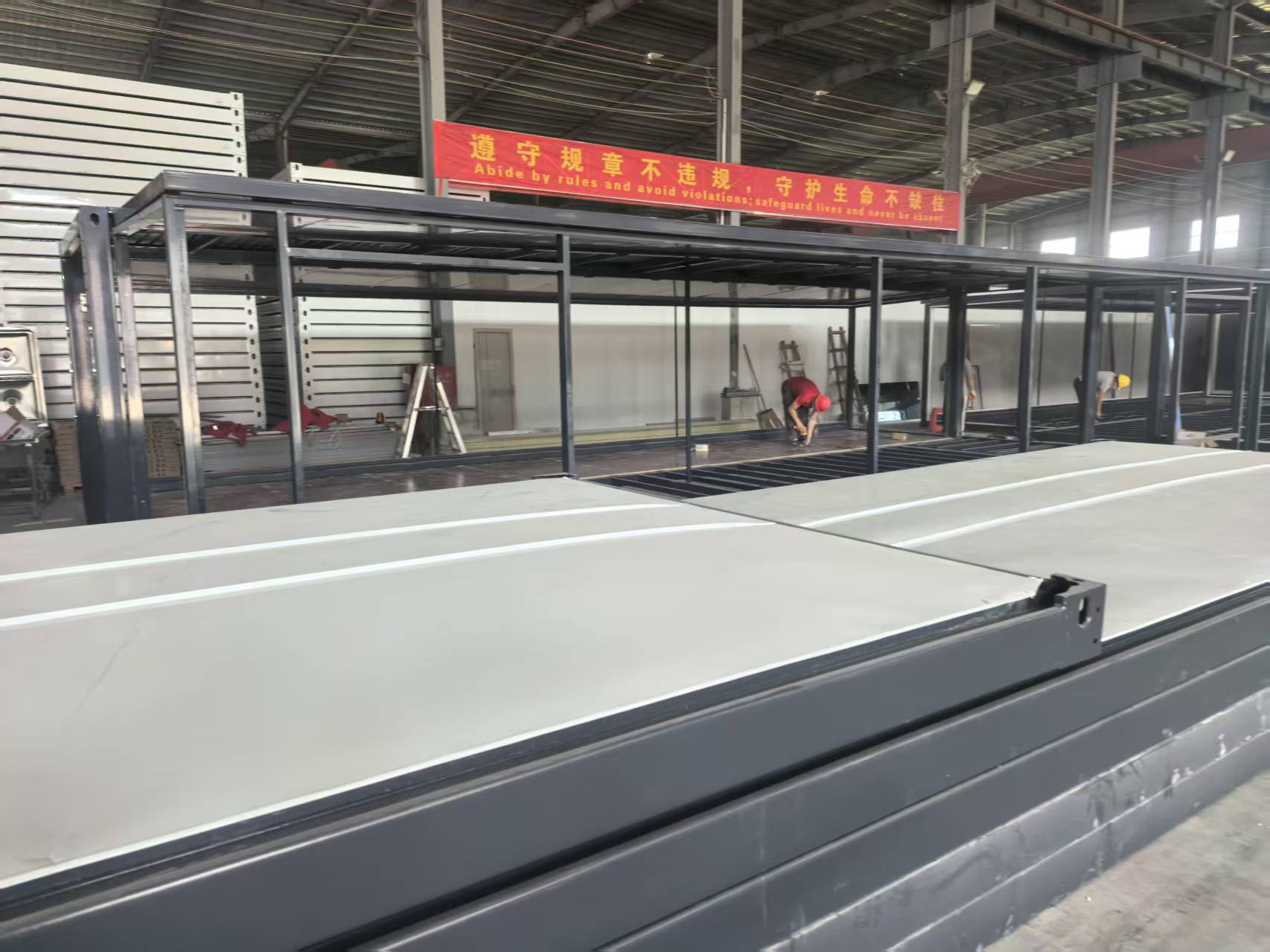
The final landing cost of an expandable prefab house is heavily determined by its transport volume and assembly speed. Manufacturing these structures requires high-precision CNC processes, automated laser cutting, and robotic welding to ensure tight tolerances. This precision allows the walls, roof, and floor panels to fold into a compact block for transit without risk of structural warping or damage.
To optimize shipping efficiency and maintain structural integrity under transport stress, Guangdong Uni-House Technology Co., Ltd. utilizes automated production lines to construct reinforced hinges and secure locking mechanisms. The company holds 150 utility model patents focusing on structural optimization, installation efficiency, and weather resistance, allowing folded modules to undergo rigorous structural fatigue life testing and airtightness testing before shipment.
This shipping methodology has been proven in large-scale international applications, such as the Indonesian Coal Mine Living Area Project. An Indonesian local energy company utilized 2000 sets of these modular units as mining workers’ dormitories. By transporting the structures in a flat-packed and folded state via standard ocean containers, the project minimized ocean freight overheads and enabled rapid layout construction upon arrival at the mining site.
Furthermore, using certified structures prevents costly delays at international ports. The modular container houses hold CE Certification (No. 3N240819.GUTQO66), covering detachable, flat pack, folding, and expandable structures. This certification ensures seamless compliance with customs requirements across the EU region, Australia, North America, South America, Southeast Asia, and the Middle East, mitigating unexpected demurrage fees.
The table below provides a logistical comparison between various modular housing types, detailing how design impacts shipping configurations and per-unit transport costs.
| Prefab House Type | Standard Shipping Method | Capacity per 40HQ Container | Relative Shipping Cost per Unit | Logistical Characteristics |
|---|---|---|---|---|
| Expandable Container House | 40HQ or 20FT Ocean Freight | 1 to 2 Units | Medium | Folds flat for transit; expands to triple its size on-site. |
| Flat Pack Container House | 40HQ Ocean Freight | 4 Units | Low | Roof and floor pre-assembled; pillars packed inside. |
| Detachable Container House | 40HQ Ocean Freight | 12 to 15 Units | Very Low | Completely disassembled frame and panels; maximum density. |
| Space Capsule House | 40HQ or Flat Rack | 1 Unit | High | Shipped fully assembled; requires heavy-duty handling. |
Logistical and financial transactions are structured to secure transit timelines. Standard payment terms consist of a 50% deposit in advance and the remaining 50% balance paid in full before shipment. All international maritime shipments are dispatched using secure 40HQ or 20FT sea containers.
How does the folding design of an expandable house reduce ocean freight costs?
The folding design compresses the width of the structure to fit inside a standard shipping container. This eliminates the need for specialized open-top or flat-rack containers, which carry premium freight rates.
What additional local shipping fees should buyers prepare for?
Buyers must budget for port destination terminal handling charges (THC), customs clearance fees, local import tariffs, flatbed truck transport from the port to the job site, and on-site mobile crane rental for unloading.
Do weather resistance capabilities hold up after container transit?
Yes. The structural designs undergo modal analysis and weather resistance testing to handle extreme high and low temperatures, heavy winds, and sandstorms, ensuring the sealing gaskets and structural joints remain intact after transport.
To optimize the shipping budget of an expandable house, buyers should coordinate bulk orders that fully utilize the volume of a 40HQ container. Selecting a manufacturer operating under an integrated industry-and-trade business model ensures that container loading, packing configurations, and custom clearances are handled by a single entity, reducing administrative and transit bottlenecks. For detailed technical solutions or logistical support, please reach out to us via [email protected].
Guangdong Uni-House Technology Co., Ltd. is an export-focused manufacturer established under the Guizu Group, providing design, R&D, manufacturing, installation, and after-sales support for modular housing. Established in 2008, the company operates a fifteen thousand square meter factory area, employing 200 workers and maintaining an annual production capacity of 10,000 sets. With 150 utility model patents, the company serves international markets across Australia, the Middle East, North America, and Southeast Asia. The company holds CE Certification (No. 3N240819.GUTQO66) and has successfully completed major regional housing contracts, including the 2000-set Indonesian Coal Mine Living Area Project.

Tags :
 Sign Up To Our Newsletters

Tel : +8613377650003
Email : [email protected]


© 2026 Guangdong Uni-House Technology Co., Ltd.

Hi! Click one of our members below to chat on