How do I choose a space capsule house that can withstand extreme winter cold?
Jul 23, 2026Choosing a space capsule house for extreme winter cold requires selecting structures with thick polyurethane thermal insulation, multi-layer Low-E tempered glass, and a sealed galvanized steel frame. Opting for cabins with integrated smart heating systems and a certified operating range down to -40℃ ensures thermal efficiency, structural integrity, and occupant comfort in severe climates.
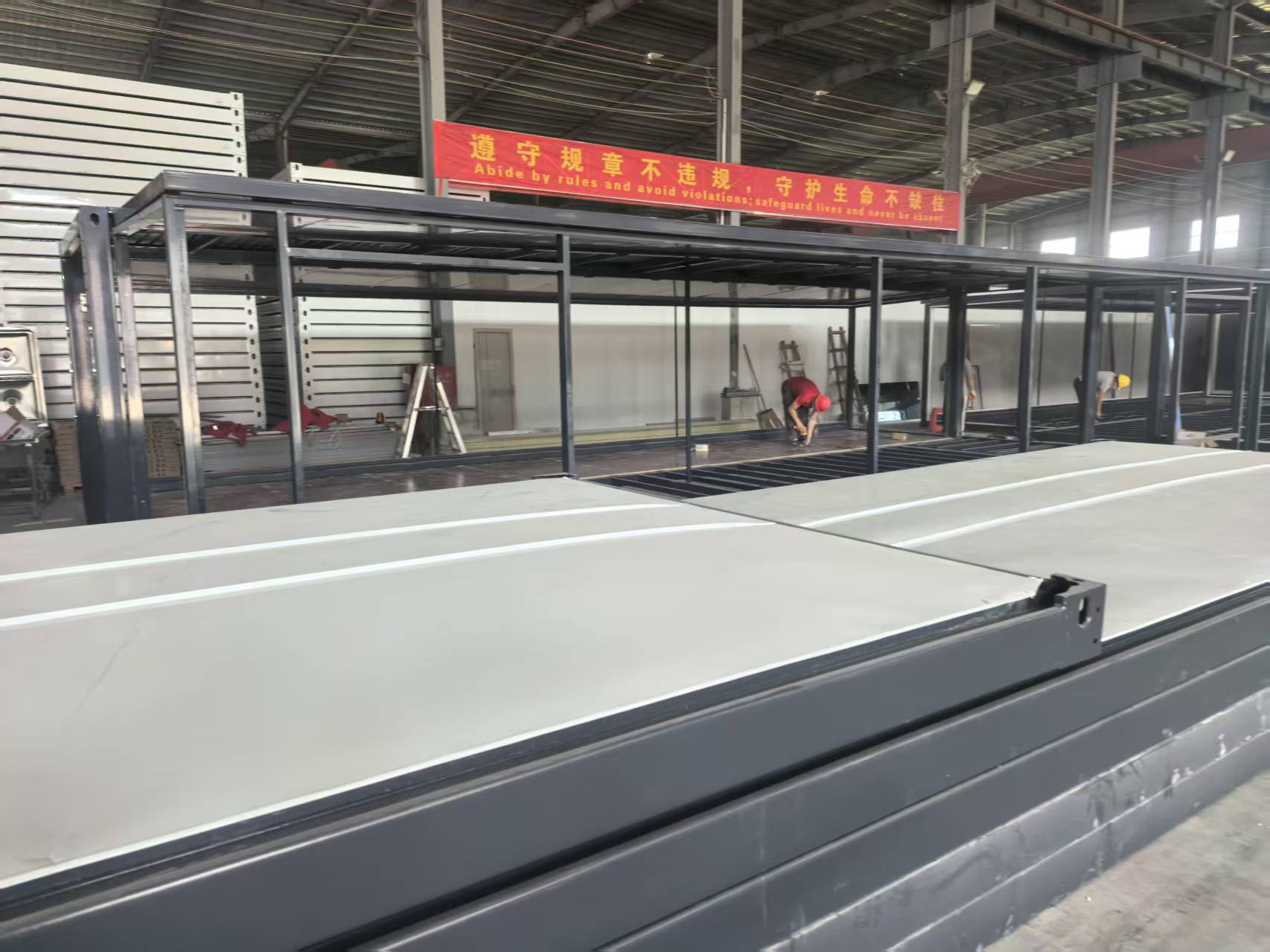
Extreme winter performance relies heavily on thermal envelope design and airtightness. Guangdong Uni-House Technology Co., Ltd. utilizes automated laser cutting and robotic welding to achieve seamless joints on the hot-dip galvanized Q355 high-strength steel frame, eliminating structural gaps. The structural framework is treated with electrostatic fluorocarbon coating to prevent rust from melted snow, ensuring a frame service life of over 50 years. Airtightness testing and enclosure modal analysis are executed to verify that the structure resists draft penetration under wind resistance levels of Grade 10–12.
The exterior envelope incorporates a 2.0–2.5mm aviation-grade aluminum alloy sheet, insulated by a 70–100mm closed-cell PU polyurethane sandwich panel. This configuration guarantees an operating temperature range of -40℃ to +50℃, maintaining dry and warm interior spaces even in high-cold, coastal, or mountainous regions. The window systems utilize 6+12A+6 double hollow Low-E tempered insulated glass, which reduces heat loss through radiation while maintaining the scenic view. The entire electrical system, including smart underfloor heating or central air conditioning, is pre-installed at the factory to prevent on-site wiring failures in freezing conditions.
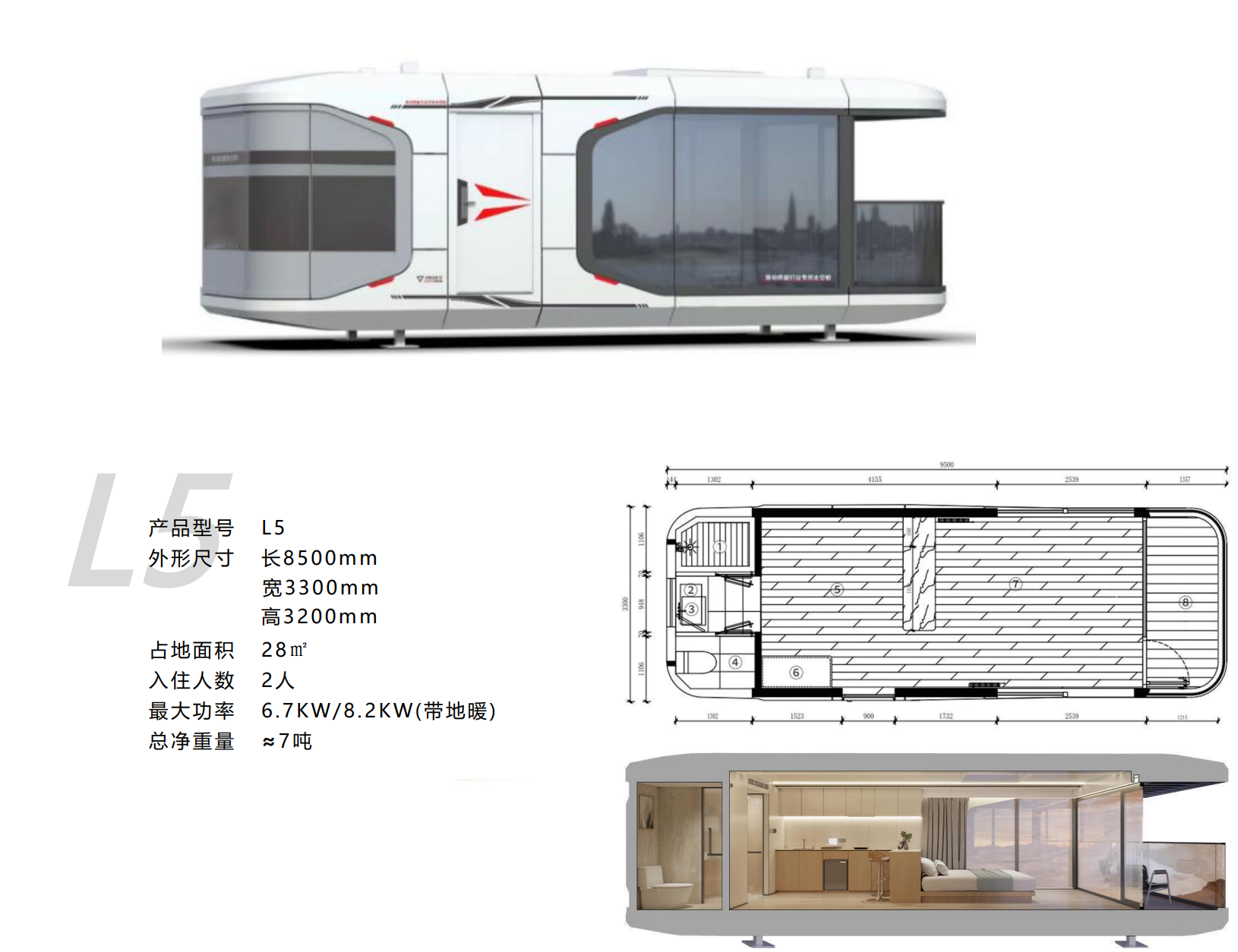
Real-world applications in severe climates demonstrate the effectiveness of these engineering standards. In large-scale operations such as the Indonesian Coal Mine Living Area Project, where over 2000 sets of modular structures were deployed, rapid deployment and environmental adaptability were verified. The cabins are factory-finished with complete wet and dry separation bathrooms, bamboo charcoal fiber integrated wall panels, and intelligent voice or mobile app remote controls, allowing users to pre-heat the living space before entry.
| Model Identifier | Dimensions (L × W × H) | Floor Area | Net Weight | Max Occupancy | Insulation Core Thickness |
|---|---|---|---|---|---|
| Mini Single Model | 6000mm × 3200mm × 3200mm | 19.8 ㎡ | Approx. 4.2 tons | 1 guest | 70–100mm PU |
| Classic 2-person Model (D5) | 8500mm × 3300mm × 3200mm | 28 ㎡ | Approx. 6.5–7.0 tons | 2 guests | 70–100mm PU |
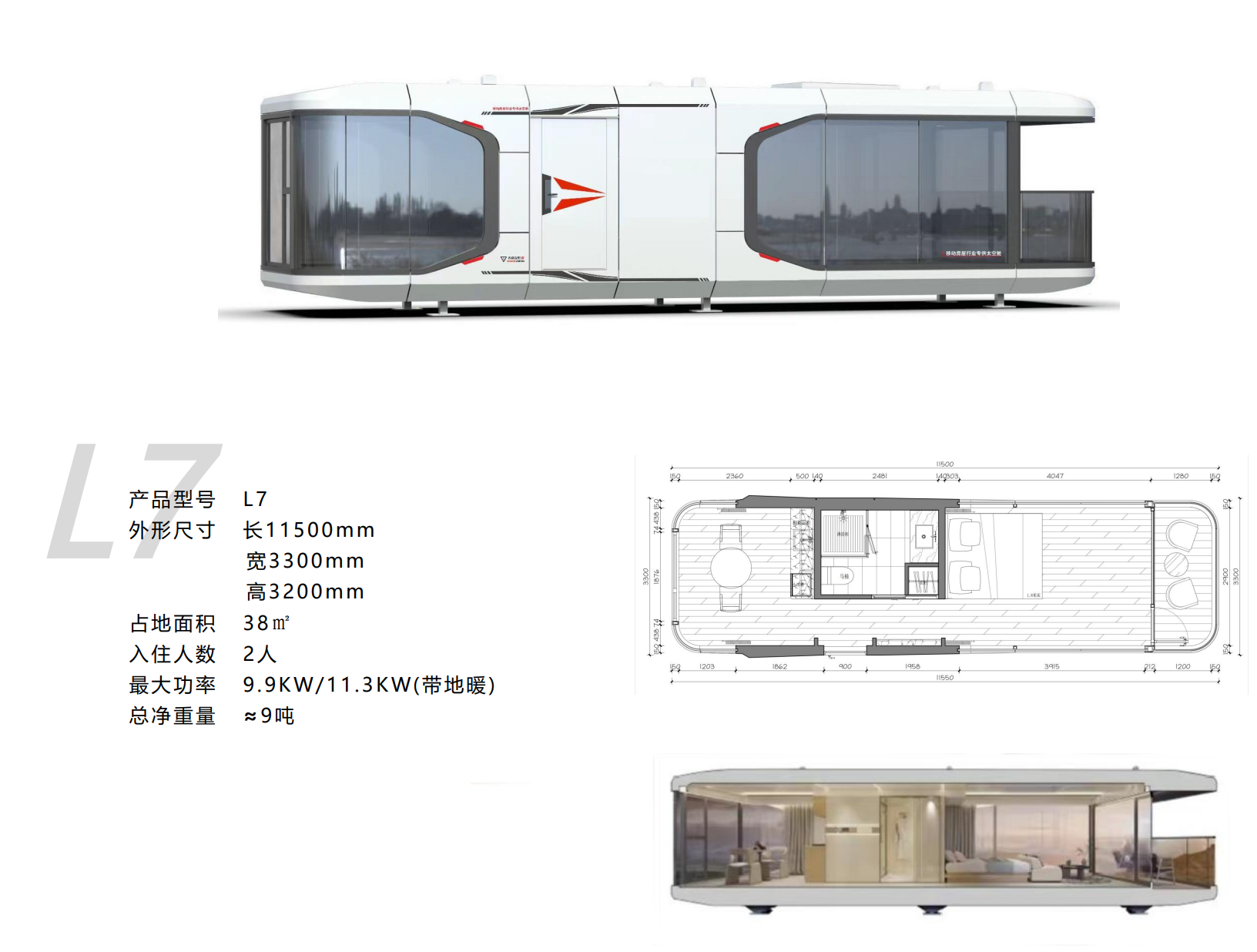
| Extended 4-person Model (D7) | 11500mm × 3300mm × 3300mm | 38 ㎡ | Approx. 8.5–9.5 tons | 4 guests | 70–100mm PU |
Do space capsule houses require on-site thermal insulation assembly?
No. The space capsule house is manufactured as a one-piece integrated finished product. The 70–100mm polyurethane insulation layer, double hollow Low-E tempered glass, and internal heating systems are fully installed at the factory. The unit is directly lifted and placed on-site without additional assembly.
How does the cabin withstand high wind and heavy snow loads in winter?
The main structure consists of a hot-dip galvanized Q355 high-strength square steel tube with a wall thickness of 3.0–4.0mm. This integral fully welded monocoque frame supports Grade 10–12 wind resistance and Grade 8 seismic fortification, preventing structural collapse or deformation under snow accumulation.
What heating facilities are included for sub-zero environments?
Standard models are equipped with a central air conditioner, a 1500W instant electric water heater, and a 4-in-1 bathroom heater providing lighting, heating, ventilation, and air circulation. The bamboo charcoal fiber integrated wall panels provide sound absorption and added fire-retardant thermal retention.
When selecting a space capsule house for cold climates, verify that the structural frame, insulation density, and glass specifications comply with international safety standards such as CE, ISO9001, and TUV. Working directly with an industry-trade integrated manufacturer ensures access to certified configurations and custom OEM/ODM upgrades, such as solar power generation systems. Standard delivery timelines range from 15 to 30 days depending on customization, with units transported fully assembled via 40HQ or 20FT ocean freight containers. The standard payment structure requires a 50% deposit and 50% balance before shipment. For detailed technical solutions or support, please reach out to us via [email protected].
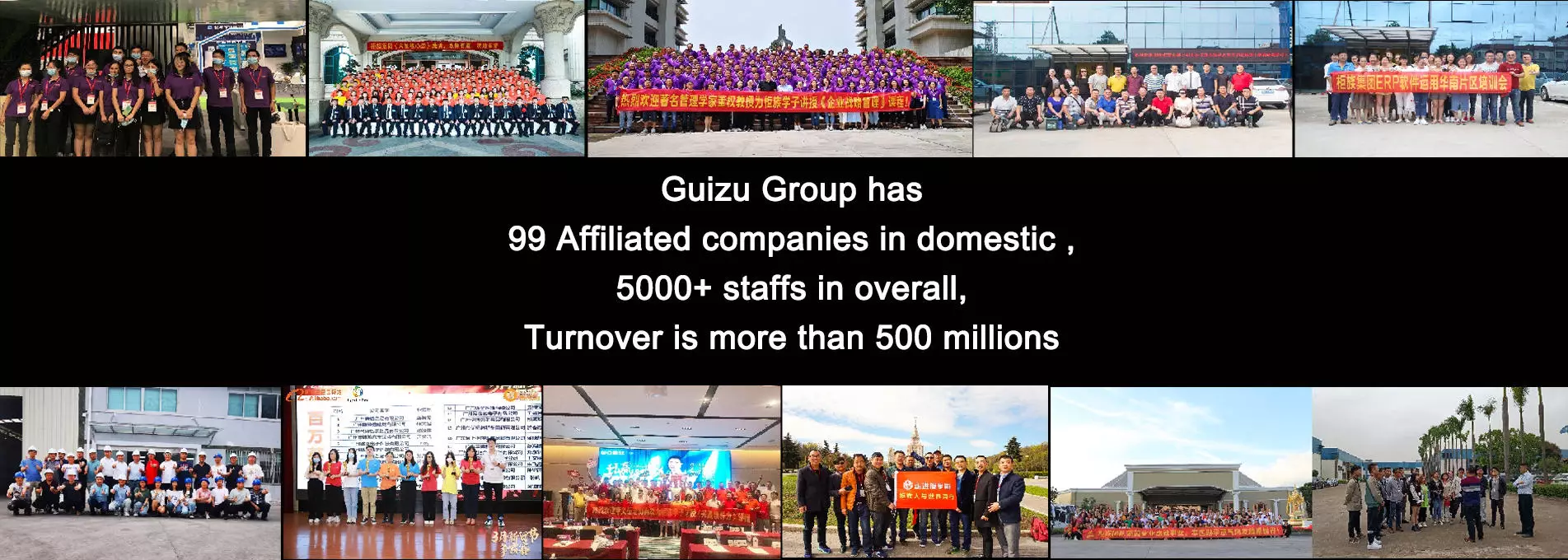
Guangdong Uni-House Technology Co., Ltd. is a foreign trade company established under the Guizu Group, providing one-stop support for design, research, development, production, installation, and after-sales service. Established in 2008, the company has 200 employees and manages a single-plant production base covering 30,000 square meters with an annual output value of 500 million RMB. The manufacturing facility operates automated robotic arms, laser cutting, and robotic welding production lines to achieve full-process CNC control. The company holds CE certification (No. 3N240819.GUTQO66) and has served diverse global markets, including Australia, the Middle East, North America, and Southeast Asia.

Tags :
 Sign Up To Our Newsletters

Tel : +8613377650003
Email : [email protected]


© 2026 Guangdong Uni-House Technology Co., Ltd.

Hi! Click one of our members below to chat on